
Deep Dig
Tap the rock, hire the crew, go deeper
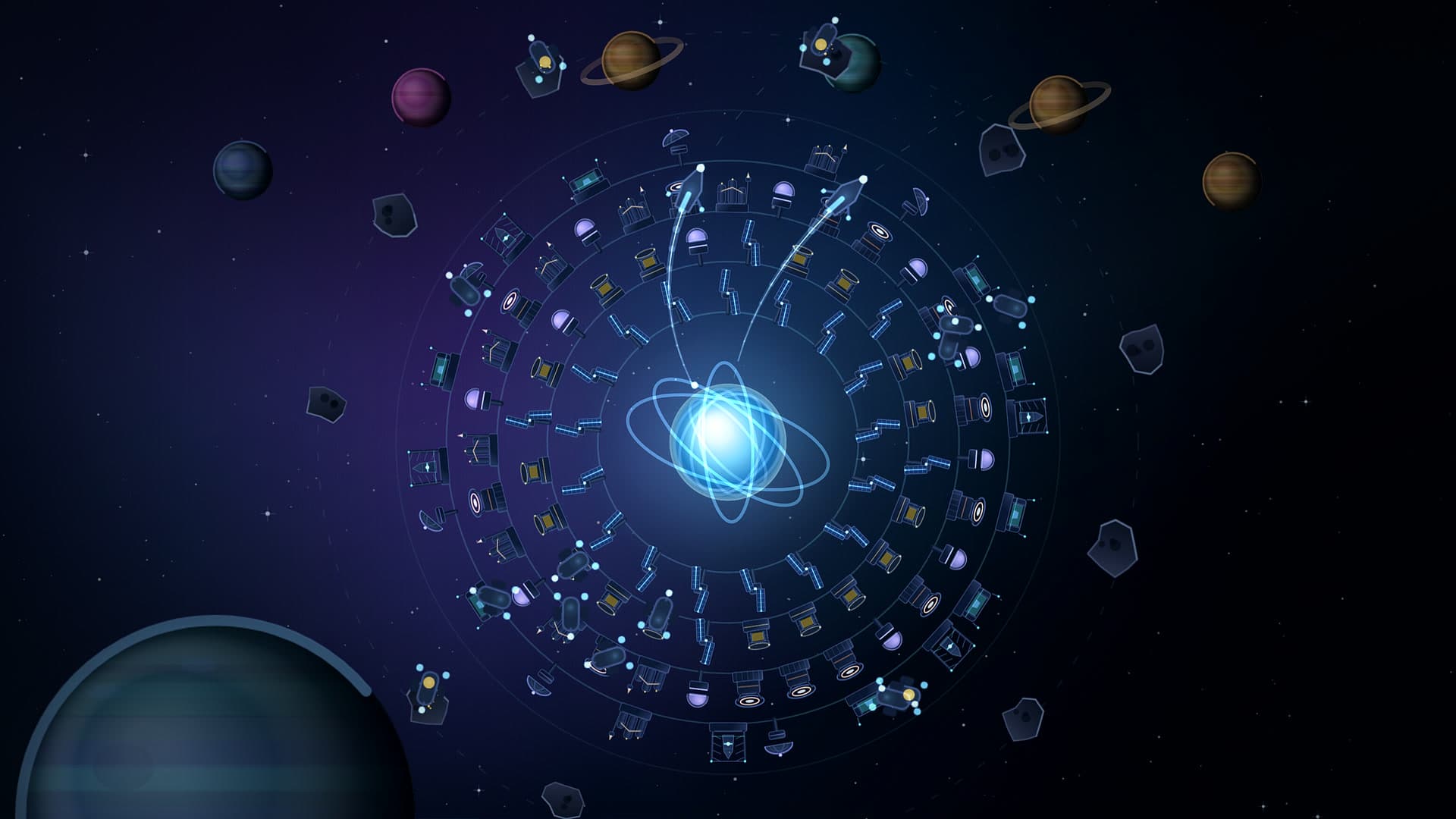
Star Forge begins with almost nothing: a reactor core turning over in empty space, and a tap that shakes a little energy out of it. Spend that on a solar array and its wings unfold on the inner ring. Spend again and a drone bay opens its doors, drones slide out to the asteroid belt and come back heavy with alloy. Every purchase is a real object bolted onto the station, so the ring you are looking at is exactly the ring you paid for, growing from two lonely modules to a full three-deep collar of reactors, refineries, hangars and dyson petals around a core that never stops glowing.
Three resources drive everything. Energy comes from solar arrays, fusion reactors and, much later, mirror petals the size of a moon; alloy is mined by drones and cracked in refineries; research trickles out of labs and observatories and buys the upgrades that bend the whole curve — output multipliers, a longer surge on every tap, faster probes, and an autofabricator that quietly buys the best-value module while you watch the drones work. Costs climb about fifteen per cent per copy, so the station always has a next step and never a dead end.
When you can afford it, a survey probe launches on a long curved trajectory and disappears into the dark for anywhere from half a minute to several. When it lands it charts a world, adds it to the sky behind your station and unlocks the next tier of modules. The station keeps working when the tab is closed, up to eight hours, and hands you a card of what it earned and what your probes found while you were away. Eventually the run is worth more as fuel than as a station: warp to a fresh system, trade everything you built for warp cores that multiply production forever, and start the ring again — faster, brighter, with every world you ever charted still hanging overhead.
Tap, upgrade, come back richer.
Star Forge
Grow a station, light a star