Locked Room
Twelve rooms, one key at a time
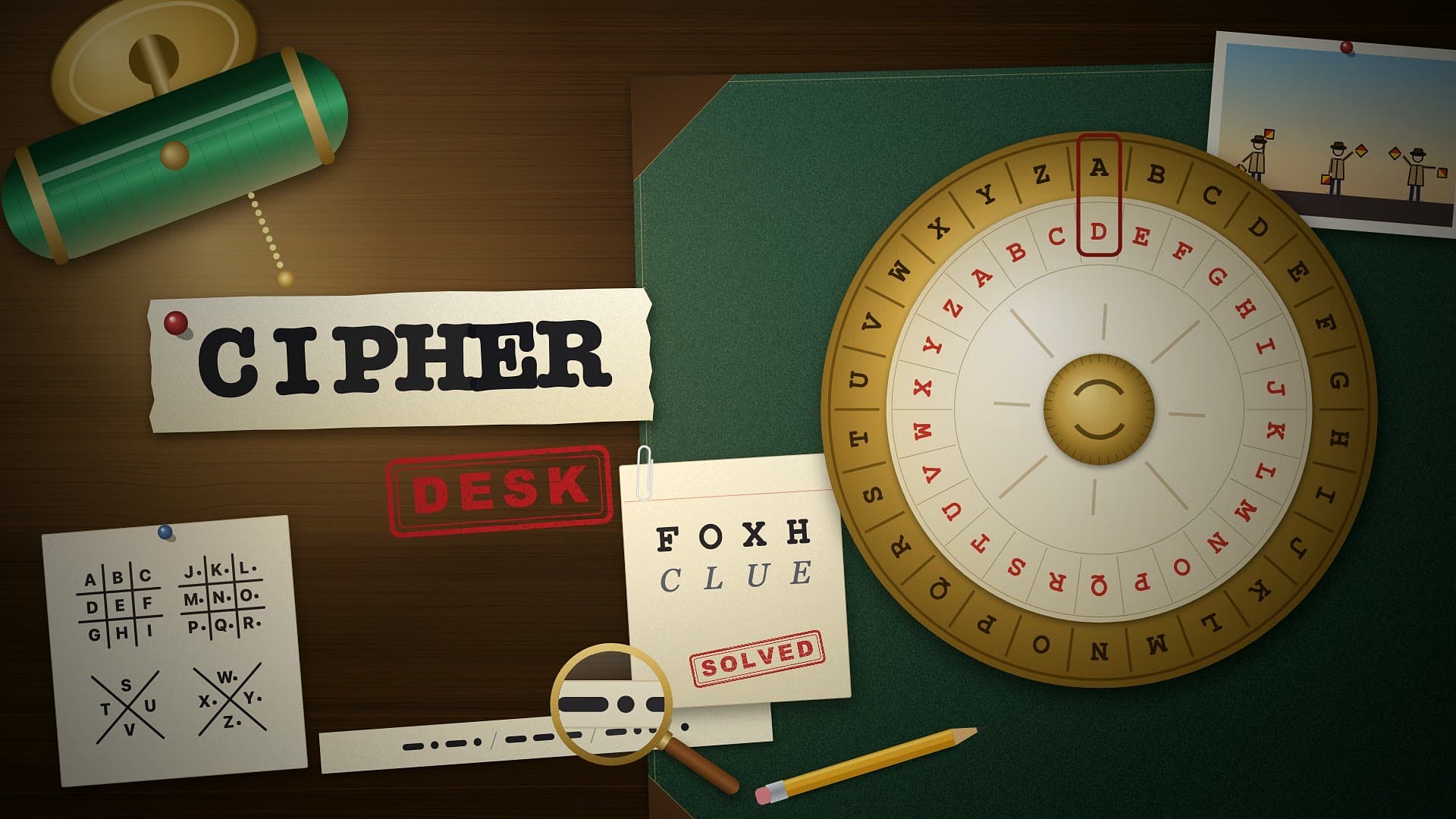
Cipher Desk sits you at a detective's desk late at night, under a green banker's lamp, with a pile of coded notes and a typewriter for the answers. There are nine kinds of code and five puzzles of each: a Caesar wheel you turn until the pencil letters spell a word, pigpen symbols matched against a key card pinned beside them, Morse on a strip of ticker tape with a telegraph key that taps it out as tones, mirror writing you read with a hand mirror, a substitution cipher you crack open by dragging a known word into place, numbers that stand for letters with a twist, a grille card with holes that you slide over a grid, a book code that points to a page, a line and a word in a little six-page notebook, and a row of signallers waving semaphore flags.
Every kind starts gently and then gets craftier. The wheel stops telling you the shift, the Morse tape loses its gaps, coffee drips over part of the key card, and the grille has to be turned before it reads. Each puzzle is built from a word list and checked as it is made, so there is always exactly one answer and you never have to guess what the game wanted. If you get stuck there are three hints: one letter of the answer, a highlight on the part of the key you need, and a reminder of how that kind of code works. Solve it quickly without them for three stars.
Type the answer on the big typewriter keys or on your own keyboard. The lamp flickers on when a case opens, the typebars clack as you type, and a rubber stamp slams SOLVED across the note when you get it right. New case files open as you go, and a Daily puzzle brings a fresh code every day with a streak to keep. It makes a quick brain workout for a coffee break, and your stars, best times and streak are kept in your browser.
Find the clue, crack the lock, spot what is hidden.
Cipher Desk
Crack the code, type the word